Working definition
Long effort is the deliberate choice of sustained, deferred-reward work over the quick dopamine hit — it compounds, becomes harder to abandon the longer it runs, and every breach is paid for in self-esteem.
How it works
You are wired to prefer the reward that arrives now. Long effort is the trained capacity to keep moving toward a reward that arrives later — and to treat the discomfort in between as information, not as a stop sign.
Two mechanics make it powerful. First, it compounds: the days stack, the new identity reinforces itself, and the system you built starts validating itself (see Identity Gap, Deliberate Practice). Second, it gets harder to throw away the longer you have held it — the same pull the IKEA effect names, the legitimate twin of the sunk cost fallacy. The cost of breaking it does not land on your calendar; it lands on your self-esteem — each time you are unfaithful to the version of yourself you are building, it costs your esteem.
Distinct from grinding: long effort is not white-knuckling. It uses interoception to tell a sensation (14h hunger) from a need, and it rides efficiency over effectivity — the same distance covered with the current, not against it.
Signature
Yann’s lived image: three weeks of eating once a day. After 16h, autophagy starts; the hunger at 14h is a sensation, not a need. The point is never the diet — it is that the longer he has held the line, the more expensive it becomes to cross it, and the more the effort works on its own.
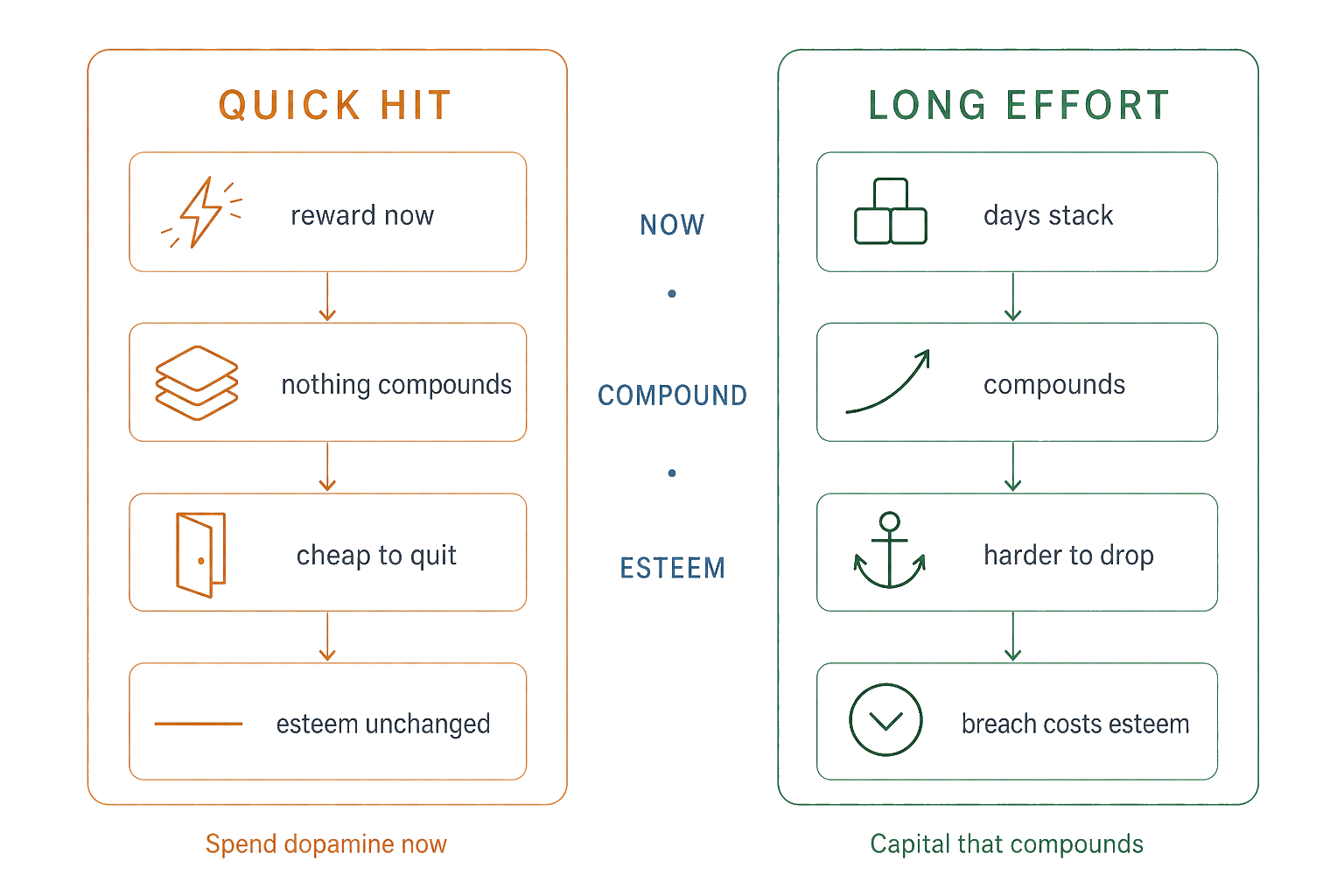
Quick hit spends now versus long effort compounds — harder to drop, breach costs esteem. Your move: Your move this week.
Your move this week
Choose one standard you have already decided on. Make the second decision out loud — I decide to maintain this — and the next time you are tempted to break it, write the precise cost to your esteem before you choose.
Adjacent
A decision is two acts
Sunk cost fallacy
IKEA effect
Esteem Matrix
Deliberate Practice