Working definition
Rate how aligned you are with the person you say you are becoming — on a scale you revisit often enough to see the curve, not just today’s mood.
How it works
Calibration scores one Battle move (1–10, daily). The Alignment Score is wider: congruence between identity, behaviour, and results across a week or a quarter — the gap between who you claim to be and what your calendar, journal, and receipts show.
Yann introduced it as a system he is designing: like stepping on a scale for body composition, you step on an alignment scale for self-trust — visual trend, not a single heroic day. What gets measured progresses (Lag vs Lead Measure). The score is useless as vanity; it works when tied to honest inputs (journal entries, Battle reps, energy · time · money triad, The Victory Journal wins).
Mechanism in three moves:
- Define what alignment means this cycle — one sentence: Aligned this quarter means I ___ (linked to Vivid Vision or your Battle).
- Pick a cadence and a 1–10 question — e.g. How aligned were my actions today with that sentence? Same time window each time (Quality of Questions).
- Review the curve — weekly or monthly: not the average alone, but when it dropped and what pattern preceded the drop (Manual Of Me, journaling, AI review from 2026-04-01).
Distinction: Calibration = training rep for one edge. Alignment Score = integrity of the whole stack — think, say, do — over time.
Signature
The image is the alignment read before the Battle ships — one number or honest band that says whether this week’s opponent matches the gap you claim — 2026-02-16.
More room passes mention this doctrine in replay narrative — search the Codex for Alignment Score or start from the latest entry on Weekly Sessions.
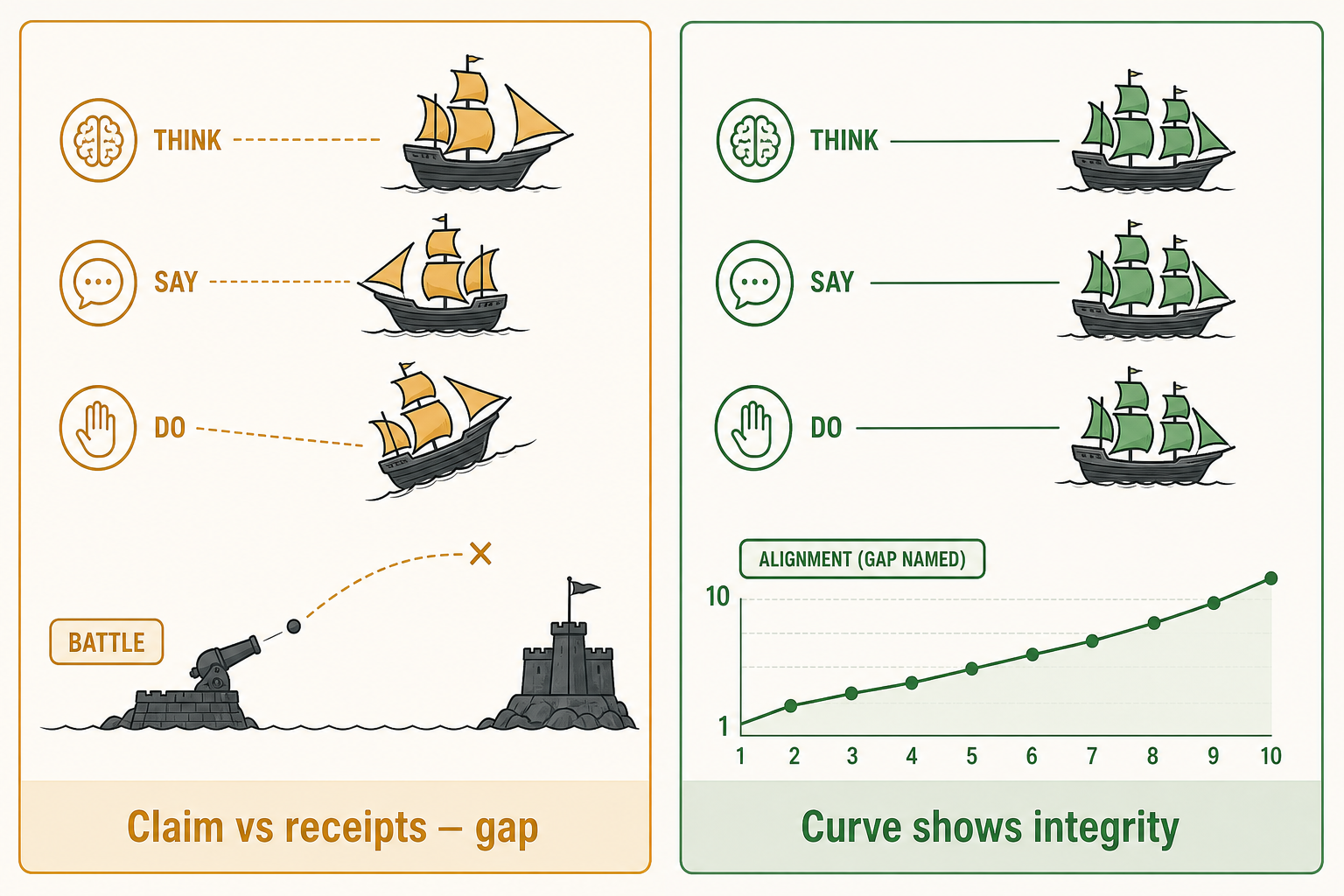
Unaligned think-say-do versus honest alignment curve before the Battle ships. Your move: Your move this week.
Your move this week
This week’s micro-action (24–72 hours):
- Write your one-line alignment definition for Q2.
- Rate it 1–10 at the same clock time five days running.
- Friday: plot the five numbers and one sentence — the dip happened when ___.