Working definition
The move is identical on the outside; the motor that powers it is opposite. Reactive moves drain. Intentional moves liberate.
How it works
The doctrine sharpens Being Perceived as a Troublemaker with a critical filter. Two members both act as troublemakers in a meeting. One is reacting to old wounds — they shamed me, so I am allowed to push back hard. The other is acting from a deeper place — there is a part of me that needs to express itself, and I allow the perception that comes with that expression.
Same scene. Opposite inner work.
The reactive motor:
- Feeds on what someone else did.
- Requires a trigger from the outside.
- Justifies the move with a wound or a wrong.
- Drains you because it depends on the other being available as the cause.
The intentional motor:
- Starts inside.
- Serves a part of you that needs space.
- Names a cost in advance and accepts it.
- Liberates you because the act exists with or without an external trigger.
The Club is interested in the second. Yann’s filter, line by line: what is the intention behind this move?
Signature
The image is naming the move before the trigger owns you — you state intention upstream so the body is not negotiating mid-conflict — 2026-03-30.
More room passes mention this doctrine in replay narrative — search the Codex for Intention Behind the Move or start from the latest entry on Weekly Sessions.
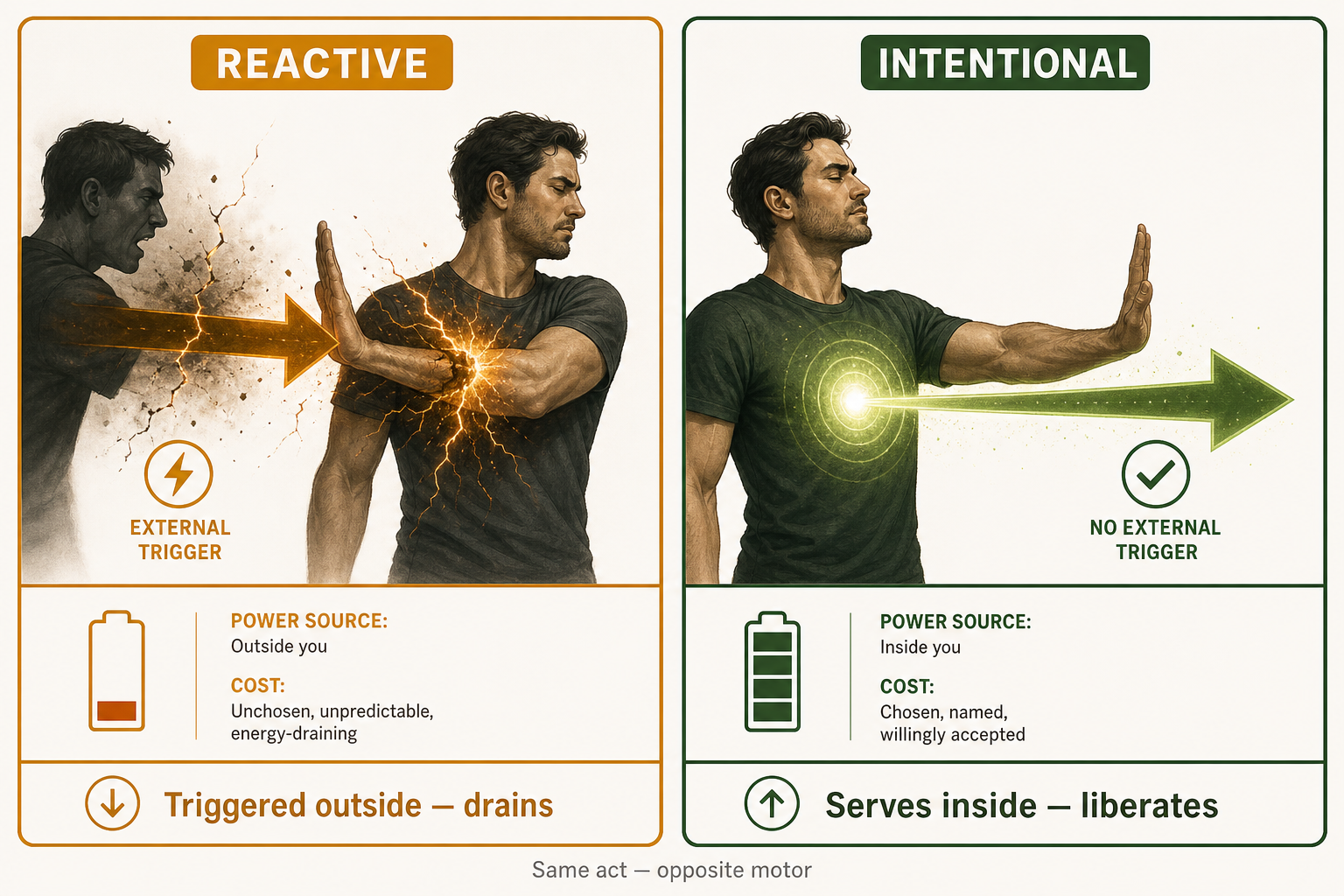
Same outward act — reactive motor drains, intentional motor liberates. Your move: Your move this week.
Your move this week
This week’s micro-action (24–72 hours):
- Before each instance of this week’s Battle, ask out loud: *what is the motor right now?
- Am I reacting to something, or am I serving something?* Write the answer in two words in your voicenote (Voicenotes).