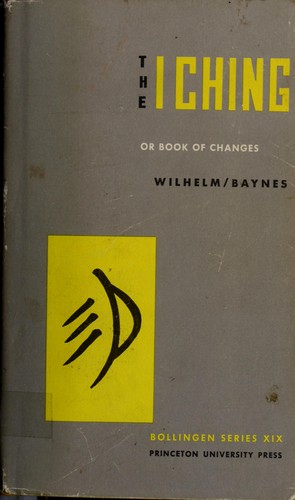
 | The I Ching maps change through sixty-four hexagrams — yin and yang lines compose situations, not fixed fate. Wilhelm’s translation frames cosmic polarity and timing judgment for readers who treat it as wisdom text, not fortune vending. Richard Wilhelm First published 1923 - Reprint (1967) · Princeton University Press · ISBN 9780691097503 |
|---|
Key principles
- Hexagram situation map — Six-line figures encode context — read structure, not isolated omen.
- Yin–yang polarity — Complementary forces — change is relational, not zero-sum victory.
- Changing lines logic — Moving lines transform reading — static label misses transition.
- Timing over force — Right action depends on phase — pushing against season wastes energy.
- Consultation ritual frame — Question quality shapes reading — vague ask yields vague mirror.
- Commentary tradition layer — Ten Wings and scholars — text accretes interpretation across centuries.
Core science
The I Ching is classical Chinese philosophy and divination literature — Wilhelm/Baynes edition is the standard Western gateway on Yin and Yang. Not empirical psychology; pair with Tao Te Ching for complementary Taoist pole maps in Club doctrine.
Application
Reach for this volume when yin–yang polarity or change-phase language needs classical spine — not as substitute for decision analysis. Open Yin and Yang on the Atlas shelf for the mechanism map.