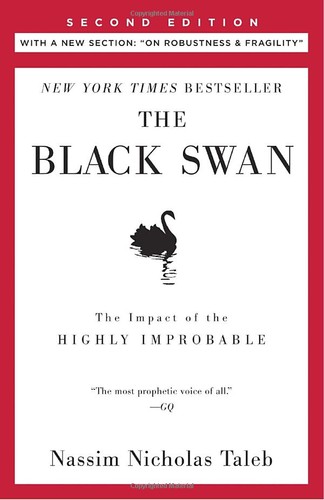
 | Taleb argues that history is shaped by rare, high-impact, retrospectively rationalized events — black swans — while humans live inside narratives that pretend the world was predictable. The coaching move is not cynicism; it is humility about models and respect for tail exposure. Taleb First published 2007 - Updated (2010) · Random House Trade Paperbacks · ISBN 9780812973815 |
|---|
Key principles
- Black swan — Rare event, extreme impact, explainable only after the fact — the story arrives late.
- Narrative fallacy — The mind compresses randomness into coherent stories — fluency is not foresight.
- Mediocristan vs Extremistan — Some domains are thin-tailed; others concentrate risk — use different tools.
- Confirmation trap — Evidence that fits the story gets overweighted — disconfirming tails stay invisible until too late.
- Barbell and optionality — Survive the left tail, expose to bounded upside — posture over prophecy.
- Epistemic humility — Models are useful liars — know where yours was never tested.
Core science
Popular synthesis of tail risk, uncertainty, and human judgment biases — essay science more than a single trial program. It pairs with the heuristics-and-biases spine (Judgment Under Uncertainty) on overconfidence and with Nassim Taleb on the Atlas shelf for mechanism vocabulary that precedes antifragile design.
Application
Reach when strategy treats the future as a spreadsheet mean — or when one bad quarter is treated as proof of permanent identity. Open Antifragility on the Atlas shelf for dosed-stress posture after tail humility lands.