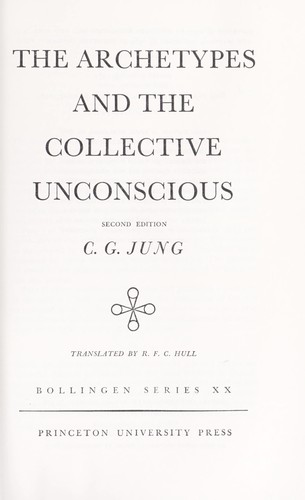
 | Jung’s collected essays on archetypes, the collective unconscious, and symbolic life — the spine for reading myth, dream, and archaic imagery as psychic structure, not decoration. Jung First published 1959 - Reprint (1981) · Princeton University Press · ISBN 9780691018331 |
|---|
Key principles
- Collective unconscious — A shared stratum of psyche beneath personal memory — carries inherited symbolic patterns, not individual biography.
- Archetypes — Recurring forms (mother, shadow, hero, trickster) that organise experience before conscious narrative — felt as image, dream, or compulsion.
- Symbol as bridge — Symbols mediate between ego and unconscious — literalism kills the message; amplification recovers meaning.
- Individuation — Psychological development integrates conscious attitude with shadow and archetypal contents — wholeness over one-sided virtue.
- Projection — What you cannot own in yourself lands on others — withdrawal of projection is a discipline, not a mood.
Core science
Jung’s essays are clinical and phenomenological, not experimental psychology — they describe recurring symbolic patterns across cultures and the therapeutic work of integrating unconscious contents. Modern cognitive and affective neuroscience does not validate “collective unconscious” as a literal inherited store; treat archetypes as a heuristic map for recurring human motifs paired with Archaic Psyche on the Atlas shelf.
Application
Reach when archetypal or archaic psyche material surfaces under cost — identity work, dream material, or repeating relational scripts that feel older than this week’s Battle. Open Archaic Psyche for the neutral mechanism frame before importing myth wholesale into strategy.