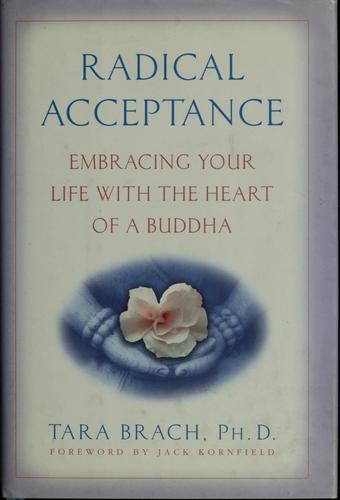
 | Brach treats suffering as a war you run on the part you will not inhabit. Radical here means root, not extreme: you go to the place the refusal started. Two wings — clear seeing, and the warmth that lets the seeing stay — keep the bird in the air; one wing alone is either cold analysis or sticky comfort. Brach First published 2003 - Edition (2003) · Bantam · ISBN 9780553380996 |
|---|
Key principles
- Two-wings bird — Mindfulness sees the rejected sensation without a story; compassion stays with what is seen so the seeing does not become another attack.
- Radical as root — The work is not more intensity. It is contact with the original refusal — the part you have been at war with.
- Trance of unworthiness — A running verdict that you are not allowed to occupy the life you already have; the trance ends in contact, not in a better argument.
- Saying yes to what is — Acceptance is not approval and not passivity. It is the end of energy spent against yourself so a next act can be chosen.
- Sacred pause — A gap between the sensation and the thousand questions that would solve it; the pause is the first hold.
- Belonging to the earth — A paradigm flip: you are not the owner of the ground you stand on; the war of possession relaxes.
Core science
Brach writes from Buddhist psychology and clinical practice, not from a single experimental programme. The operational spine overlaps exposure (staying with the rejected sensation), self-compassion research, and the cost of experiential avoidance. Treat the two wings as a personal-standard kit, not as a protocol that replaces therapy.
Application
Reach for this volume when a part is being solved instead of inhabited, or when a lifetime has been spent against a ninety-second sensation. Use it when the question is whether refusal of what is present is running as quiet self-hate. Pair Permission to live when the missing yes is the remaining life, and Use versus suffer when the part could be fuel instead of a sentence.