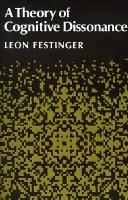
 | Festinger’s landmark volume — cognitive dissonance as the pressure to reduce inconsistency between beliefs, actions, and commitments. The original architecture behind modern self-justification maps on the Atlas shelf. Festinger First published 1957 - Reprint (1962) · Stanford University Press · ISBN 9780804709118 |
|---|
Key principles
- Dissonance as drive — Inconsistent cognitions generate psychological pressure — the mind seeks reduction, not neutral audit.
- Magnitude law — Dissonance grows with the importance of conflicting elements and the proportion of dissonant to consonant cognitions.
- Reduction routes — Change a belief, add a consonant belief, or downgrade the importance of the conflict — rationalization is a lawful strategy, not random noise.
- Forced compliance — Counter-attitudinal action with insufficient external justification shifts attitude toward the act — the 20 paradigm.
- Commitment escalation — Public, effortful, or freely chosen acts increase dissonance load — small early yeses compound.
Core science
Festinger’s program launched experimental social psychology on attitude change via inconsistency — the origin volume in Cognitive dissonance lineage. Later replications debate effect sizes on specific paradigms; the structural claim (inconsistency motivates revision) remains foundational.
Application
Reach when values and behaviour quietly disagree — or when a regretted yes hardens instead of updating. Open Self-justification drive and Identity coherence on the Atlas shelf before argument alone. Member trail: Identity (MoC) · Justification fight when the fight shape matches the Dissonance lineage row.