Definition
Transgenerational shame is the body charge that says who am I to want that — ambition or visibility collapses inside before desire is absent.
Origin
Family-systems and shame literature (Bradshaw, intergenerational trauma frames) describe shame as relational glue — rules about who may stand out, want more, or be seen.
Mechanism
- The word (ambition) can trigger collapse while domain ambition (couple, craft) stays reachable — same token, opposite charge per person.
- Shame is not fixed by argument; it yields to staying with the body and naming the inherited rule without hunting drama.
- Pairs with Transgenerational memory when the reaction feels older than today’s facts.
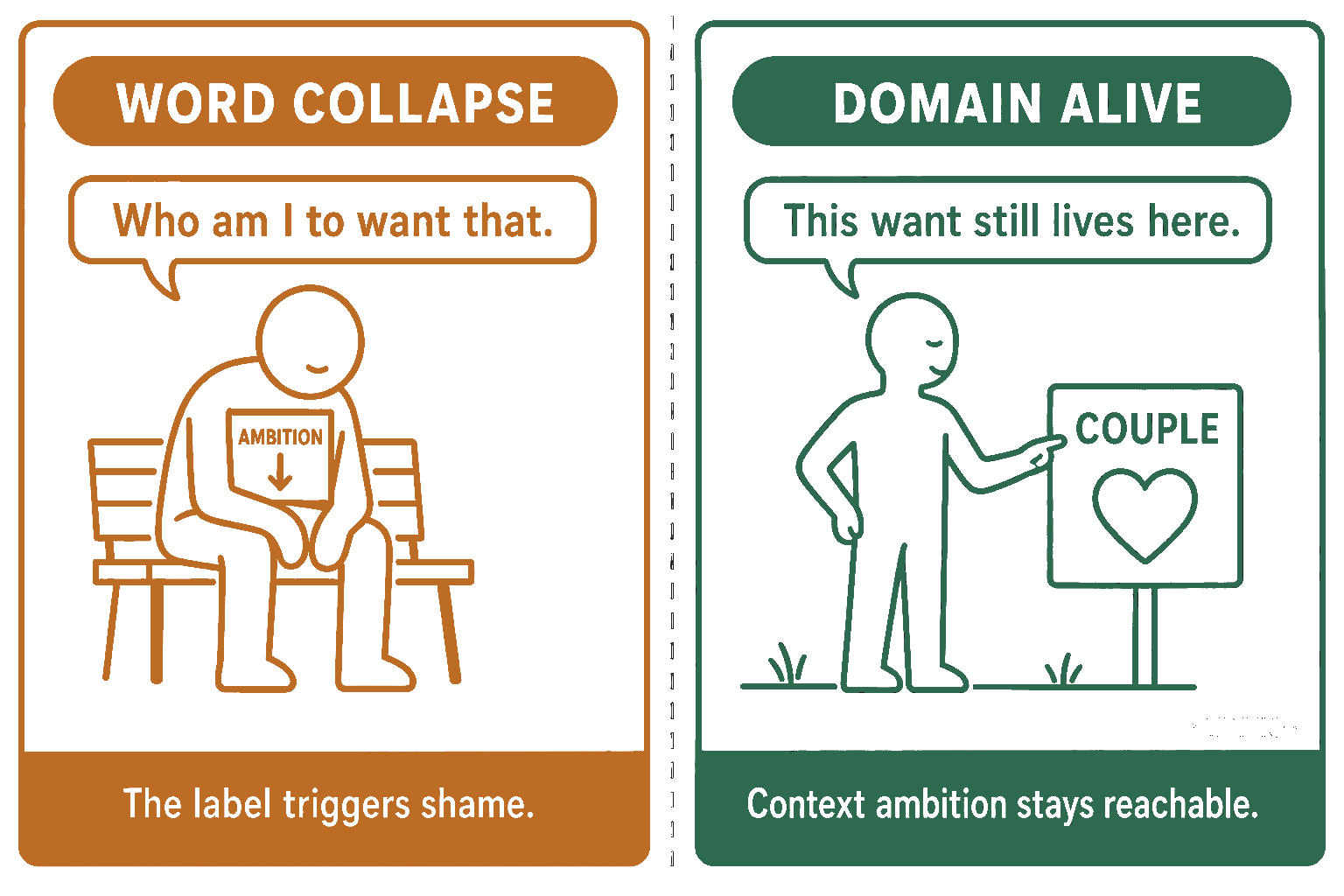
Word collapse versus domain alive — the token triggers shame, not absence of desire. Pair Inherited script · Master of Opposites.
Applications
When a label makes you laugh, hide, or deflate, log: what would shame cost if I admitted this want? Separate global labels from context ambition (on/off sheet per alter-ego work).
Sources
Cite
- Bradshaw, J. (2005). Healing the shame that binds you (rev. ed.). Health Communications
- Nathanson, D. L. (1992). Shame and pride: Affect, sex, and the birth of the self. Norton
- Schore, A. N. (2003). Affect dysregulation and disorders of the self. Norton
Related doctrine
Master of Opposites · Problems at the Height of Ambitions