Definition
Self-acceptance is the willingness to own, experience, and take responsibility for one’s own thoughts, feelings, and actions — without denying or disowning them, and without necessarily approving of them.
Origin
Nathaniel Branden names self-acceptance the second of his six pillars of self-esteem. It echoes the humanistic tradition (Carl Rogers’ unconditional positive regard): the paradox that a person changes most readily once they stop fighting their own experience.
Mechanism
Acceptance is not approval and not resignation.
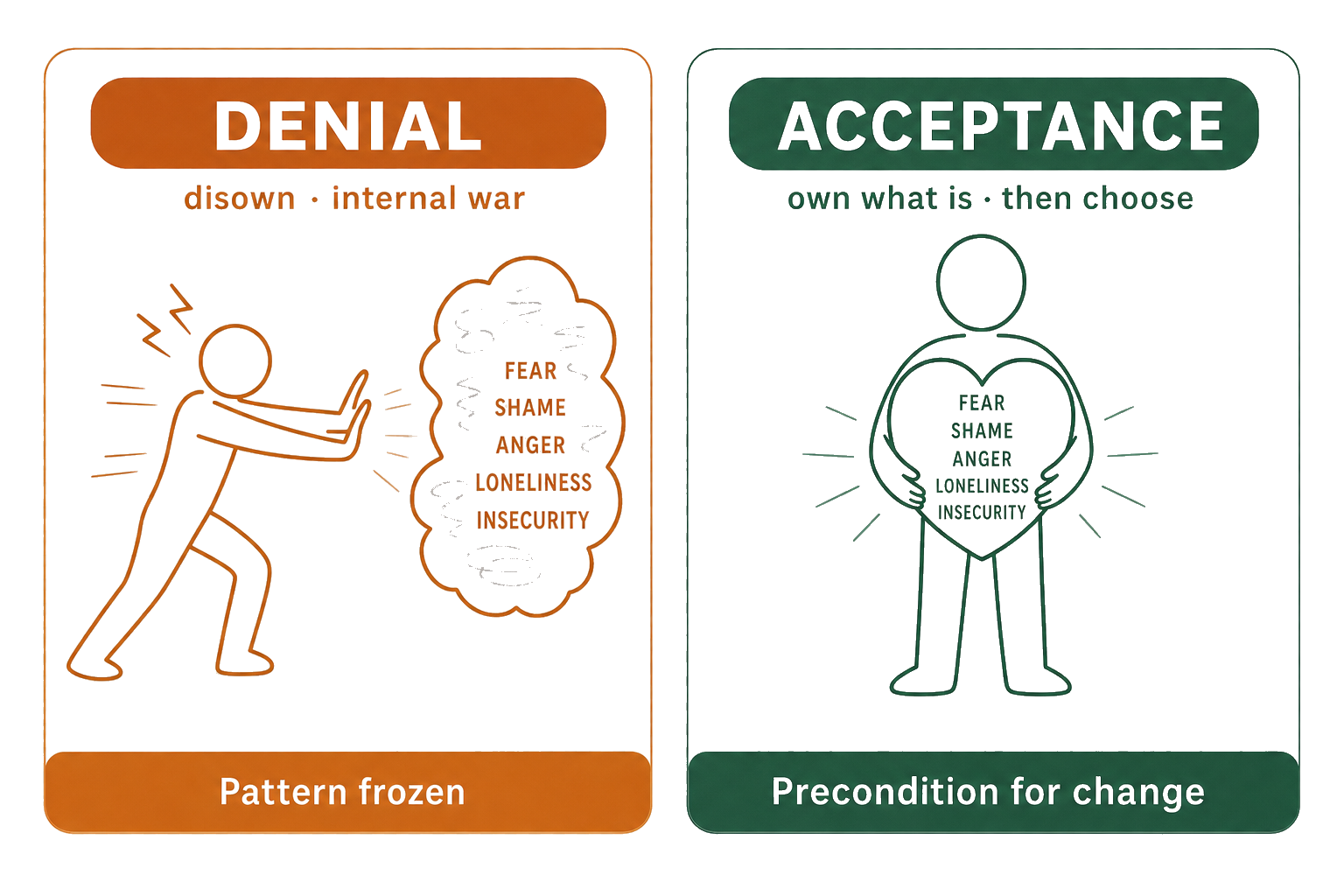
Denial versus owning what is — accept the fact before you judge it. Pair Self-esteem · Six Pillars.
It is the act of acknowledging what is — “this is what I feel, this is what I did” — before judging it. Denial freezes a pattern in place because you cannot work on what you refuse to see; acceptance is the precondition for agency. Branden distinguishes accepting the fact of an experience from endorsing it: you can own an impulse without acting on it, own a mistake without collapsing into shame.
Applications
- Facing a flaw or failure without self-attack, so it becomes workable.
- The first move before any change: name and own the current state.
- Reducing the energy lost to internal war with one’s own feelings.
Sources
Cite
- Branden, N. (1994). The six pillars of self-esteem. Bantam.
- Neff, K. D. (2003). Self-compassion: An alternative conceptualization of a healthy attitude toward oneself. Self and Identity, 2(2), 85–101.