Definition
Neuroendocrinology is the science of the two-way interaction between the brain and the hormonal system: how neural signals control hormone release, and how hormones feed back to shape brain function and behaviour.
Origin
The field grew from the recognition that the brain governs the body’s glands through the hypothalamus and pituitary. Robert Sapolsky’s work on stress made one of its circuits widely known: the HPA axis (hypothalamus → pituitary → adrenal), which converts a perceived threat into a cascade of stress hormones.
Mechanism
The hypothalamus translates neural information into hormonal commands, signalling the pituitary, which in turn directs peripheral glands (adrenal, thyroid, gonads).
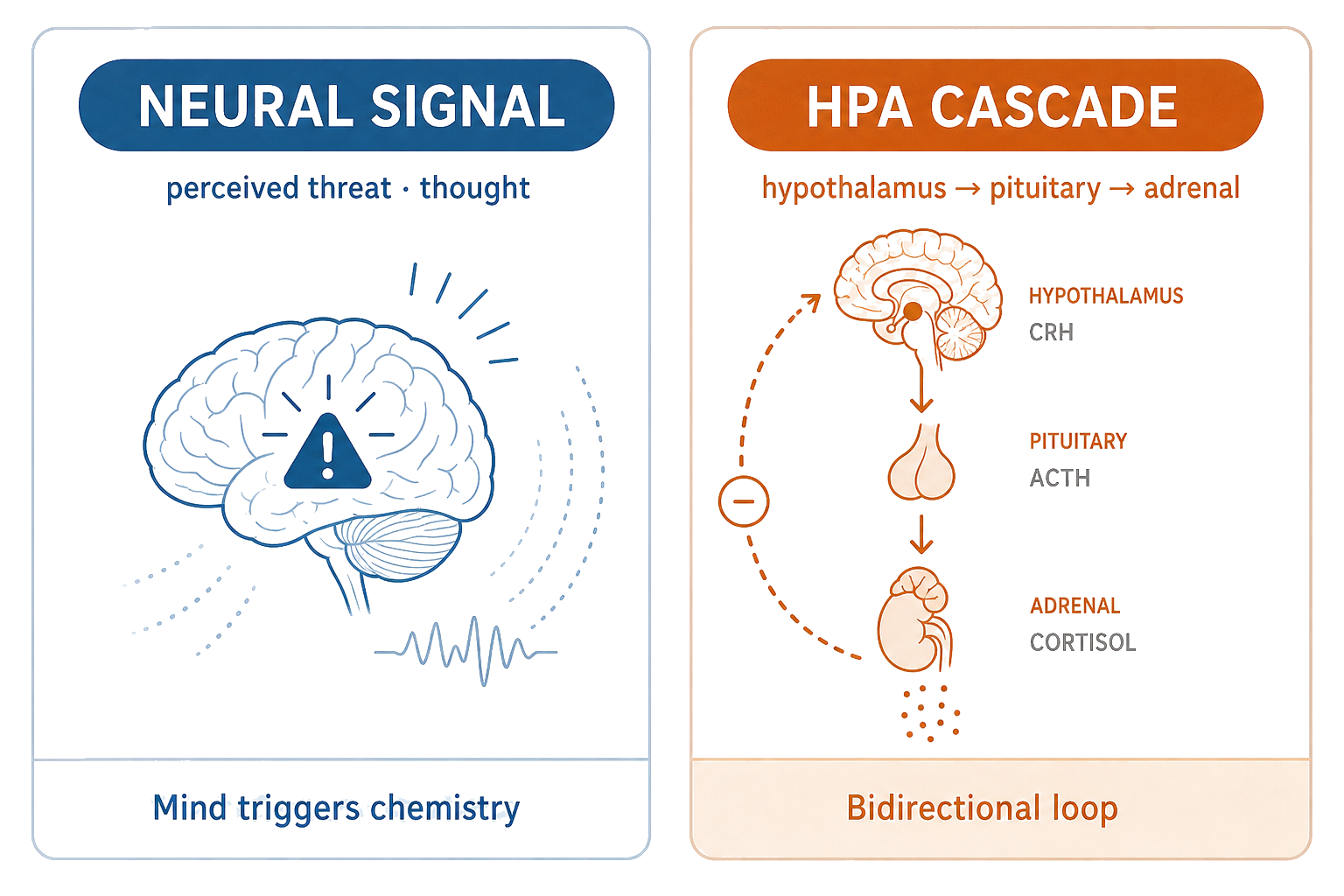
Thought triggers chemistry; cortisol feeds back on the brain. Pair Interoception · Stress infrastructure design.
Hormones such as cortisol then circulate and act back on the brain, closing a feedback loop that regulates arousal, mood, metabolism, and memory. Because the loop is bidirectional, a thought (a perceived threat) can trigger a measurable chemical state, and a chemical state can bias subsequent thought — the biological basis for why psychological framing has physical consequences.
Applications
- Understanding why chronic psychological stress produces physical wear (sustained cortisol).
- Grounding interoception: the bodily sensations you read are partly hormonal signals reaching the brain.
- Explaining the mind–body link without metaphor — through measurable endocrine pathways.
Sources
Cite
- Sapolsky, R. M. (2004). Why zebras don’t get ulcers (3rd ed.). Henry Holt.
- McEwen, B. S. (1998). Stress, adaptation, and disease: Allostasis and allostatic load. Annals of the New York Academy of Sciences, 840(1), 33–44.