Definition
Affect theory architecture is the frame that treats shame, interest, joy, and related states as innate patterned affects — then studies the scripts that bind them into identity over time.
Origin
Silvan Tomkins’s affect theory treats a small set of innate affects as primary — facially patterned, fast, and relational — before narrative explanation arrives. Donald Nathanson’s clinical work maps shame–pride dynamics and the compass of shame defenses on that base.
Mechanism
Precision matters: not every bad mood is shame; not every pause is guilt.
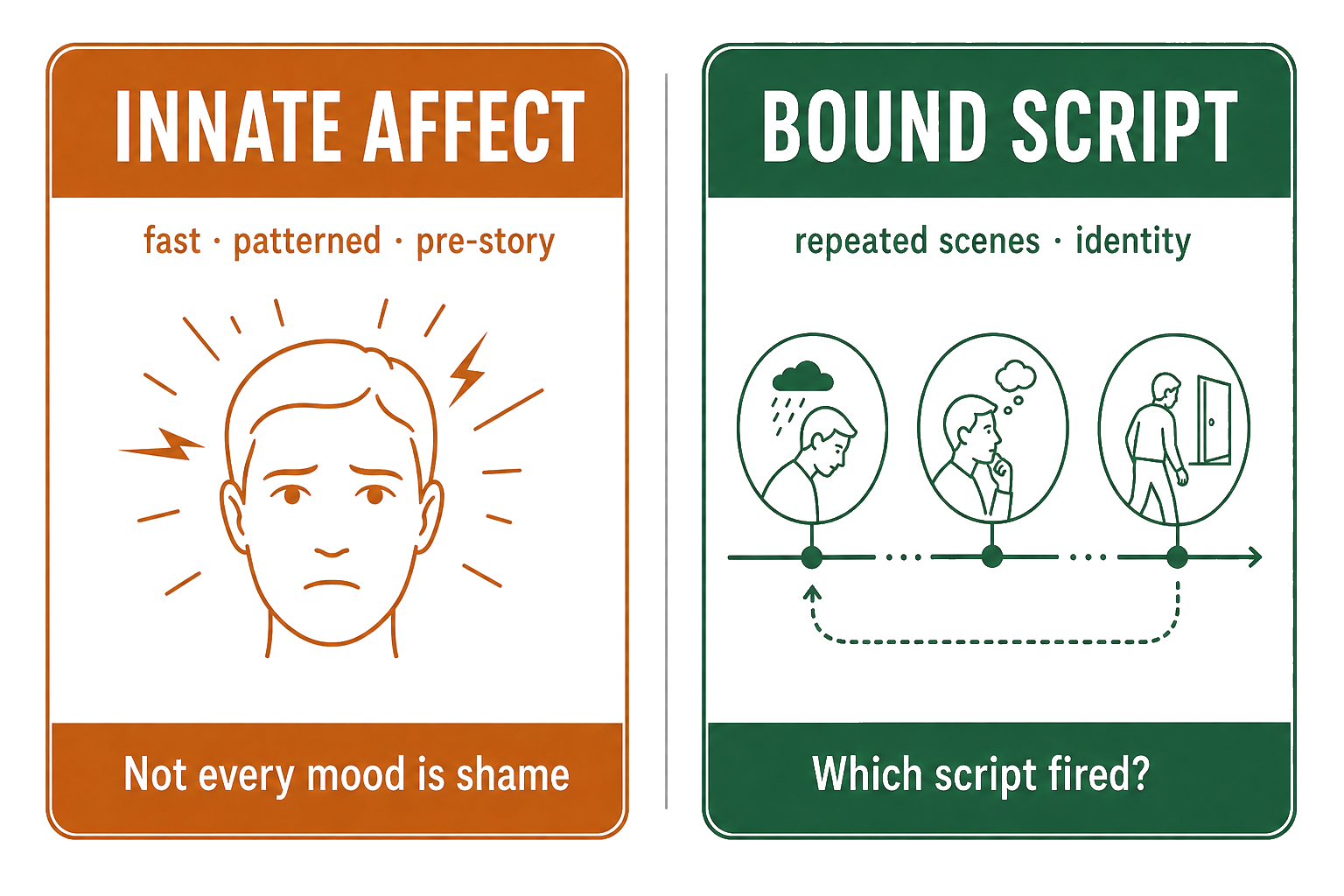
Innate affect flash versus bound script over time — name what fired. Pair Shame and Pride · AIC.
Scripts link repeated affect scenes to expectations about self and other — useful for reading compass moves (withdrawal, attack-self) without moralizing the collapse.
Applications
When a visibility or ambition label triggers disproportionate charge, ask which affect fired and which script may be binding — before debating the surface topic.
Sources
Cite
- Nathanson, D. L. (1992). Shame and pride: Affect, sex, and the birth of the self. W. W. Norton
- Tomkins, S. S. (1962–1992). Affect, imagery, consciousness (Vols. 1–4). Springer