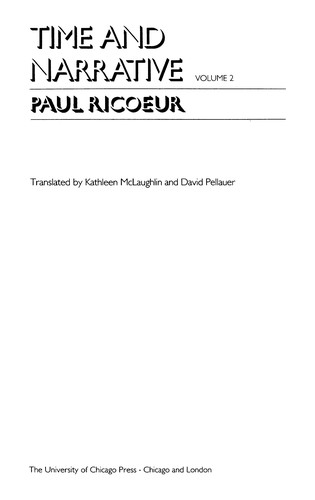
 | Ricoeur argues human time becomes meaningful through emplotment — events gain sense when configured as plot, not when listed as chronology alone — narrative is cognitive bridge between lived flux and told identity. Paul Ricoeur (1984) · University of Chicago Press · ISBN 9780226713320 |
|---|
Key principles
- Emplotment configuration — Events into plot — coherence is constructed, not found raw.
- Mimesis threefold arc — Prefiguration, configuration, refiguration — reader completes meaning.
- Historical versus fictional narrative — Both configure time — truth claims differ, structure overlaps.
- Identity through narrative — Selfhood is told and retold — biography is ongoing edit.
- Hermeneutic circle — Part and whole co-define — no neutral outside view of one’s story.
- Time versus temporality — Clock time differs from human time — lived duration needs narrative form.
Core science
Time and Narrative (3 vols., vol. 1 1984) is philosophical hermeneutics — foundation for narrative identity work on Mythopoiesis and Narrative identity. Dense primary source; cite emplotment concepts before full trilogy read.
Application
Reach for this volume when re-authoring identity stories needs Ricoeur’s plot frame — not bullet affirmations without configuration. Open Mythopoiesis on the Atlas shelf for the mechanism map.