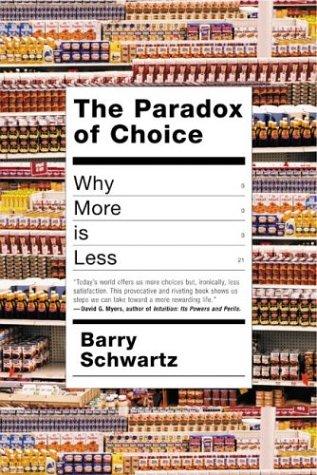
 | Schwartz names the modern trap: more options can lower satisfaction and freeze action. Maximizers chase the best and pay in regret; satisficers pick good-enough and move. Hygiene is not fewer values — it is fewer open loops before authority signs. Schwartz First published 2004 - Reprint (2005) · Harper Perennial · ISBN 9780060005696 |
|---|
Key principles
- Choice-overload paradox — Abundant options raise expectations and comparison cost — freedom can feel like failure when nothing feels final.
- Maximizer-versus-satisficer — Maximizers optimize every dimension; satisficers meet criteria and stop — satisfaction often favors the second stance.
- Opportunity-cost spiral — Every yes imagines forgone alternatives — more options inflate the ghost cost of any single pick.
- Regret anticipation — Expected regret blocks commitment — paralysis is sometimes fear of a better option elsewhere, not missing information.
- Escalating standards — More choice raises the bar for what counts as good enough — satisfaction drops even when outcomes improve objectively.
- Constraints as liberation — Bounded menus, defaults, and advance rules shrink the search space — structure is not oppression when the mind is drowning in options.
Core science
Schwartz synthesizes choice overload research for a general audience — consumer markets, careers, relationships, and everyday micro-decisions. It is interpretive social psychology at popular depth: strong on maximizer–satisficer dynamics and regret, lighter as a single-variable policy manual. Pair with Hastie–Dawes on judgment structure when teams need base rates; pair with decision hygiene when the collapse is who signs after the spreadsheet closes, not how many columns were filled.
Application
Reach for this volume when a menu of good options still produces no decision, buyer’s remorse, or endless comparison — when more research replaces commitment. Club move: Complexity Trap. Open Decision hygiene on the Atlas shelf when you need the split between gathering options and letting authority choose after analysis finishes.