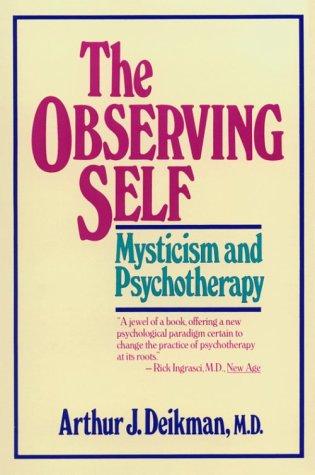
 | Deikman distinguishes the observing self from the narrative mind — witness awareness that can watch thought without fusing with it. Arthur Deikman (1982) · Beacon Press · ISBN 9780807030618 |
|---|
Key principles
- Observing self — Witness awareness distinct from narrative ego — not identical to the stream of thought.
- De-automatization — Break habitual perceptual fusion — attention widens beyond default trance.
- Identification trap — Fusing with thoughts produces suffering — disidentification is skill, not denial of agency.
- Contemplative overlap — Mystical and clinical paths share witness stance — without requiring a belief system.
- Attention training — Repeated practice stabilises observer position — meditation as shared laboratory.
- Functional versus witness — Thinking self handles tasks — observer complements agency, does not replace it.
Core science
The Observing Self (1982) bridges contemplative practice and psychotherapy — anticipates mindfulness-based clinical models; modern mindfulness RCT literature postdates Deikman but aligns on metacognitive awareness. Supports Levels of consciousness when witness layer must be distinguished from narrative and reactive states.
Application
Reach for this volume when witness consciousness or metacognitive distance is the move — Open Levels of consciousness on the Atlas shelf.