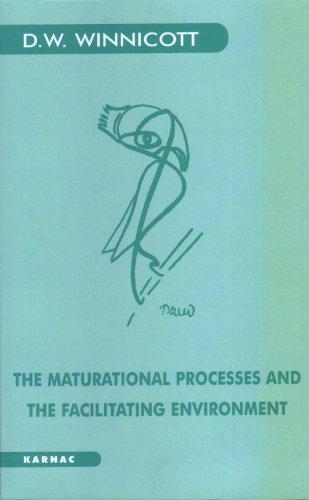
 | Winnicott describes how a facilitating environment lets the true self emerge — compliance builds a false self when early care cannot hold spontaneous gesture. Donald Winnicott (1965) · International Universities Press · ISBN 9780946439843 |
|---|
Key principles
- True self — Spontaneous gesture rooted in bodily aliveness — impulse before social editing.
- False self — Compliant shell protecting true self — when early environment cannot tolerate realness.
- Holding environment — Reliable care that buffers without smothering — good-enough provision, not perfection.
- Gradual disillusionment — Healthy separation needs manageable disappointment — not sudden abandonment.
- Transitional object — Not-me possession bridges inner and outer — play and creativity as developmental work.
- Facilitating versus impinging — Care responds to gesture — impingement forces adaptation over spontaneity.
Core science
Collected Winnicott papers (1965) are object-relations developmental theory — foundational in relational psychoanalysis and attachment-adjacent clinical thought; not modern attachment taxonomy. Grounds Being faithful to yourself versus being faithful to others when false-self compliance is loyalty at the cost of spontaneity.
Application
Reach for this volume when false-self compliance or loyalty-at-the-cost-of-spontaneity is live — Open Being faithful to yourself versus being faithful to others on the Atlas shelf.