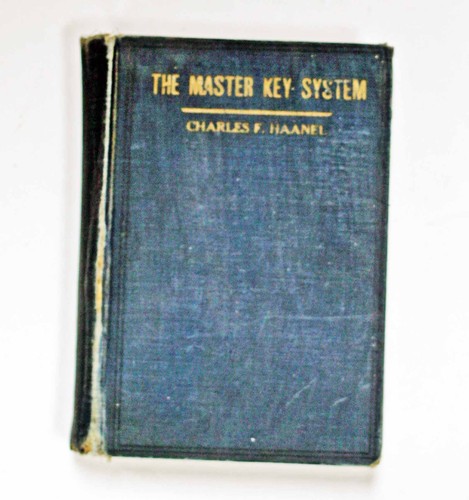
 | Haanel’s Master Key is a structured course in mental architecture — concentration, ideal held in mind, and correspondence between inner order and outer conditions. Twenty-four short lessons in the American mental-science tradition; read for rep language and historical placement, not as experimental proof that thought alone moves bank balances. Haanel First published 1916 - Reprint (2011) · Watchmaker Publishing · ISBN 9781603863639 |
|---|
Key principles
- Mental architecture — Thought organizes into a system — scattered attention produces scattered circumstance; structure precedes scale.
- Law of correspondence — Inner state and outer conditions mirror — not as magic, but as trained attention and habit loops.
- Concentration on chief ideal — One dominant aim organizes daily reps — diffused desire dissipates force.
- Inner world governance — The mind that cannot govern itself is governed by environment and impulse.
- Weekly lesson cadence — Change ships in serial installs — one mechanism per week, not one heroic insight.
- Folk epistemic boundary — Mental-science essay, not RCT evidence — pair with Self-regulation for modern mechanism.
Core science
The Master Key System belongs to New Thought mental science — primary moral and commercial literature from the 1910s on New Thought lineage. Modern bridges: self-regulation research (standards, monitoring, capacity) and motor-imagery rehearsal explain why inner practice can shift behaviour without endorsing prosperity causality claims. Do not equate correspondence slogans with Bronfenbrenner ecology — inner architecture and nested context are complementary lenses on different shelves.
Application
Reach when a member wants classical inner-system language before outer field redesign — or when prosperity writing needs a 1916 anchor beside Allen and Atkinson. Open Systems for the full map: ecological shells (Bronfenbrenner) plus folk architecture (Haanel · Hill) — different evidence bars, same word system.