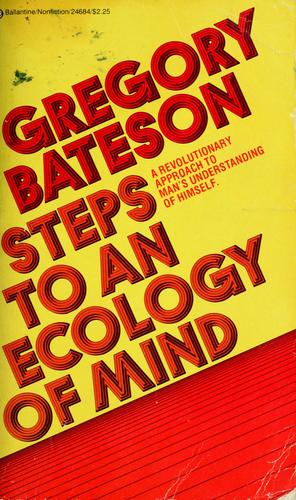
 | Bateson’s essays treat mind as ecological — patterns that connect organism, relationship, and context. Double binds, learning levels, and schismogenesis explain how families and teams train the very problems they try to solve. Bateson First published 1972 - Reprint (2000) · University of Chicago Press · ISBN 9780226039053 |
|---|
Key principles
- Pattern which connects — Mind is relationship and information — not a ghost in a single skull only.
- Double bind — Contradictory messages at different logical levels — trap without escape cue.
- Learning levels — Learning I (habit) vs II (context change) vs III (frame shift) — wrong level wastes effort.
- Schismogenesis — Complementary escalation loops — pursuit and withdrawal amplify each other.
- Cybernetic epistemology — Observers participate in systems — map includes the mapper.
- Humility before complexity — Some problems are ecological — local blame is often the wrong unit.
Core science
Bateson bridged anthropology, psychiatry, and systems theory — foundational for family therapy and second-order cybernetics. Dense prose; cite mechanisms (double bind, level of learning) rather than importing the whole metaphysics. Pair with Thinking in Systems for stocks-and-flows literacy on the same shelf.
Application
Reach when the room keeps fixing content while meta-pattern retrains the fight. Open Russian doll on the Atlas shelf for nested-layer language — or Inherited script when the bind is family-rule shaped.