 | White and Epston teach externalization — the person is not the problem; the problem story is. Inherited rules become visible narratives you can re-author, not fate written into identity. Unique outcomes and witnessing thicken the story you choose to live. White, M., & Epston, D. First published 1989 - Edition (1990) · Norton · ISBN 9780393700985 |
|---|
Mechanism card ^mechanism-card
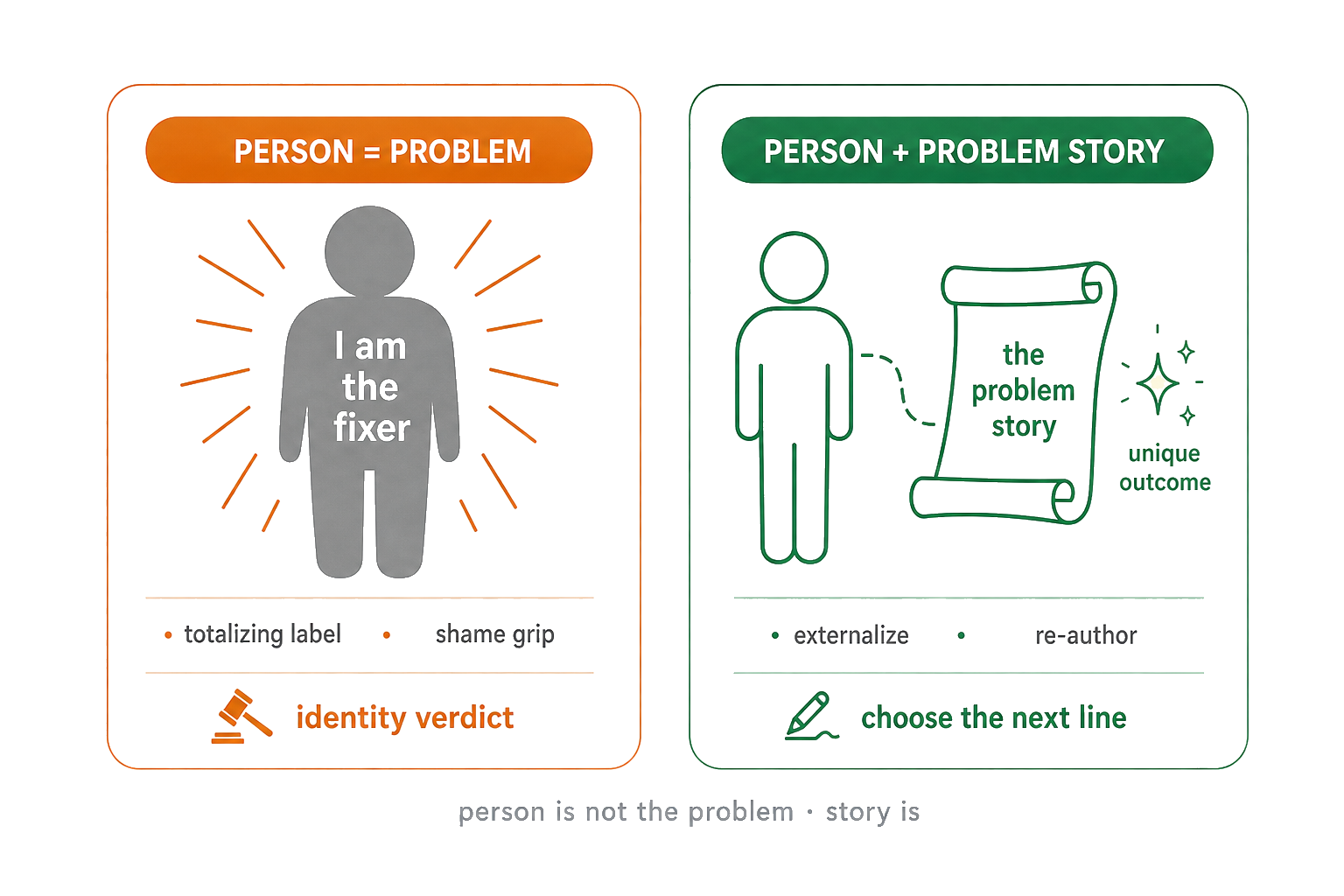
Mechanism card — person = problem (totalizing label) versus person + problem story (externalize · re-author · unique outcome). Science: Adapted Child Compensation. Your move: Application.
Key principles
- Problem externalization — Separate the person from the problem — shame and script lose totalizing grip when named as story, not self.
- Re-authoring conversation — Thickening preferred identity lines — ask which story you are writing with today’s choices.
- Unique-outcome excavation — Exceptions to the problem-saturated narrative — times the script already failed to run are evidence, not flukes.
- Dominant-discourse deconstruction — Family and culture supply the lines — you can see the inherited rule without obeying it blindly.
- Witnessing audience — Others acknowledge the new story — change lands when testimony is heard, not only thought privately.
- Document and letter rituals — Written artifacts anchor re-authored identity — external memory for the story you are choosing.
Core science
White and Epston’s founding narrative therapy text integrates post-structural ideas with clinical practice — externalizing conversations, letter writing, and community witnessing. It is practice architecture for story change, not a manualized RCT program; pair with Berne on script payoffs (Games People Play), and Adapted Child Compensation when adulthood was performed before it was modelled.
Application
Reach for this volume when a label feels like identity (I am fragile, I am the fixer) rather than a move you can revise — especially under Adapted Child compensation. Externalize the story, mine one unique outcome, then choose the next line deliberately.