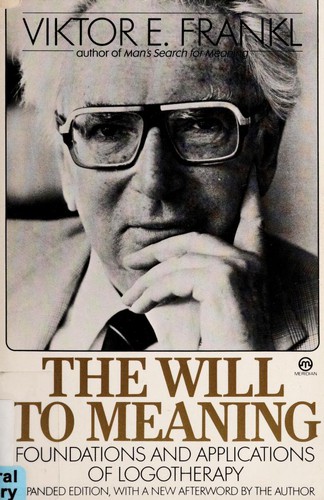
 | Frankl develops logotherapy — therapy through meaning — arguing that the primary human drive is will to meaning, not pleasure or power alone. Under constraint, the last freedom is stance toward what cannot be removed. Frankl First published 1969 - Reprint (1988) · Meridian · ISBN 9780452010345 |
|---|
Key principles
- Will to meaning — Humans orient toward purpose — emptiness and neurosis follow when meaning collapses.
- Tragic optimism — Yes to life despite pain, guilt, and death — stance, not denial.
- Attitudinal values — When situation cannot change, how one bears it remains choosable.
- Creative and experiential values — Meaning through deed and encounter — not only through attitude.
- Noogenic neurosis — Existential frustration differs from instinctual conflict — misdiagnosis wastes work.
- Pair with memoir — Man’s Search for Meaning is the entry story; this volume is the theory spine.
Core science
Frankl’s clinical and philosophical system grew from camp experience and postwar practice — influential in humanistic and existential therapy, debated on universality claims. Use as meaning-under-cost doctrine anchor on Logotherapy — not as substitute for trauma care when dysregulation is primary.
Application
Reach when a member asks what’s the point under real constraint — not as bypass, but to locate one choosable stance this week. Open Logotherapy on the Atlas shelf for the neutral mechanism map.