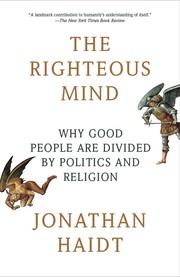
 | Intuition comes first, strategic reasoning follows to justify it. Tribal moral brains polarize by design; seeing the mechanism is the first step to transcending reflexive emotional bias. Jonathan Haidt First published 2012 - Reprint (2013) · Vintage · ISBN 9780307455772 |
|---|
Key principles
- Intuition first — Moral judgment is driven by fast intuition; strategic reasoning follows to justify the gut verdict.
- Elephant and rider — The affective system steers; reason is the press secretary, not the CEO of moral choice.
- Moral foundations — Care, fairness, loyalty, authority, and sanctity combine differently across tribes — disagreement is predictable.
- Tribal psychology — Group binding and sacred values polarize politics and teams — the brain is built for coalitions.
- Reason as lawyer — Post-hoc justification feels like discovery — seeing the mechanism is the first step past reflex bias.
- Civil discourse — Understanding moral matrices beats arguing facts at people who are defending identity, not information.
Core science
Explores moral psychology — human intuition comes first; strategic reasoning is manufactured later to justify it.
Application
Crucial for emotional intelligence and self-regulation: how tribal brains polarise, and a path to transcend reflexive emotional bias. Open Behavioral change canon on the Atlas shelf for the mechanism map.