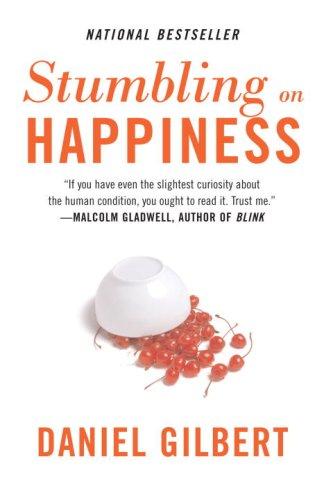
 | Affective forecasting is systematically wrong — you misremember the past and mispredict what will make you happy. Long-term plans need correction for illusion, not fantasy alignment. Daniel Gilbert First published 2006 - Reprint (2007) · Vintage · ISBN 9781400077427 |
|---|
Key principles
- Affective forecasting — People systematically mis-predict what will make them happy — confidence in the forecast is part of the error.
- Impact bias — Wins and losses feel less enduring than imagined — intensity in simulation overshoots intensity in lived duration.
- Memory revision — The past is re-authored to feel coherent — plans built on “what worked before” inherit narrative distortion.
- Presentism in imagination — You project today’s preferences onto future you — long-range goals need correction for identity drift.
- Synthetic happiness limits — Mind adapts more than expected — some goals matter less after attainment, some pains fade faster than feared.
- Plan with illusion in view — Use base rates and pre-mortems — do not optimize life only on fantasy alignment exercises.
Core science
Focuses on affective forecasting — how poorly humans predict their future emotional states.
Application
Explains why pursued goals often fail to fulfil — engineer realistic long-term plans by overcoming illusions of prospective memory. Open Behavioral change canon on the Atlas shelf for the mechanism map.