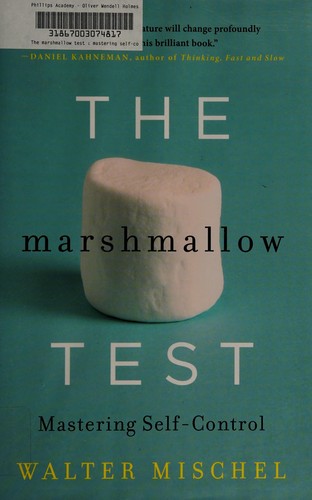
 | Self-control is trainable strategy, not moral virtue — “cool” reframes (distancing, if-then plans) reduce limbic heat. Delayed gratification mechanisms are cognitive, not slogans. Walter Mischel First published 2014 - Reprint (2015) · Little, Brown Spark · ISBN 9780316230865 |
|---|
Key principles
- Cool vs hot cognition — “Cool” distant framing and if-then plans reduce limbic heat — willpower is strategy, not moral rank.
- Delay mechanisms — Gratification delay uses attention shift, abstraction, and environmental design — not white-knuckle endurance alone.
- Marshmallow nuance — Delay capacity correlates with life outcomes but is trainable and context-dependent — not a fixed virtue score.
- Implementation intentions — Pre-committed if-then rules automate the right move when temptation spikes — friction design beats heroics.
- Executive function — Working memory and inhibition are cognitive skills — fatigue, stress, and sleep degrade them predictably.
- Train the rep — Self-control grows through practiced reframes and cue redesign — shame about past failure is the wrong intervention.
Core science
From the creator of the Stanford Marshmallow Test — details the cognitive mechanisms behind delayed gratification and executive function.
Application
Moves past willpower platitudes: “cool” cognitive strategies (distancing, if-then plans) that lower limbic system arousal under temptation. Open Behavioral change canon on the Atlas shelf for the mechanism map.