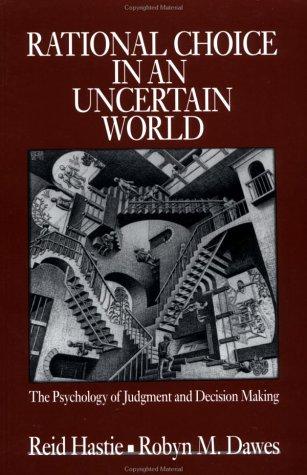
 | Hastie and Dawes teach judgment under uncertainty as a craft: heuristics are inevitable, but structure — base rates, outside view, and separating analysis from commitment — is how adults avoid signing contracts on rumination. Hastie & Dawes First published 2001 - Updated (2010) · SAGE Publications · ISBN 9781412959032 |
|---|
Key principles
- Lens-model judgment — Decisions are only as good as the cues you can actually discriminate — more data helps only when cues map to outcomes.
- Inside-view trap — The story in front of you feels unique; the outside view asks what happened in the reference class before you narrate exceptions.
- Base-rate humility — Prior frequencies anchor forecasts — ignoring them is not optimism, it is a systematic tilt toward surprise.
- Heuristic shortcuts — Availability and representativeness save time — and predictably bend probability when stakes rise.
- Calibration vs discrimination — Being confident and being right are different skills — hygiene checks which one you trained.
- Structure before impulse — Widen the process — cooling-off, pre-commitment rules, explicit criteria — so the body signs after analysis finishes, not instead of it.
Core science
Hastie and Dawes synthesize the judgment and decision-making tradition — Brunswik’s lens model, Kahneman-Tversky heuristics, linear models, and debiasing — as a readable textbook bridge between lab bias lists and everyday choice. It is not a somatic-authority manual; pair with live decision hygiene when coaching asks who decided after the spreadsheet closed.
Application
Reach for this volume when a high-stakes yes keeps flipping with mood — when you need outside-view base rates and explicit criteria before the anxious mind treats the story as unprecedented. Open Decision hygiene on the Atlas shelf for the operational split between gathering options and letting authority choose.