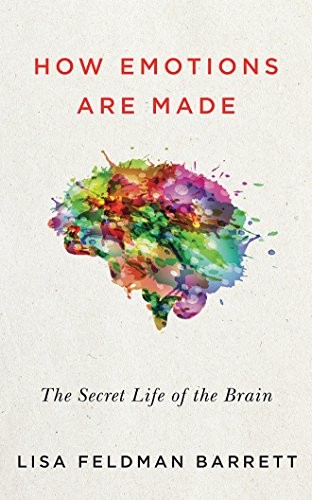
 | Emotions are constructed — the brain predicts bodily sensation, applies learned concepts, and labels the result. Felt states are biological recipes you can train inputs for, not moral identity. Lisa Feldman Barrett First published 2017 - Reprint (2018) · Mariner Books · ISBN 9781328915436 |
|---|
Key principles
- Constructed emotion — The brain does not detect ready-made emotions in the world; it predicts interoceptive signals and categorizes them using past experience, language, and culture.
- Core affect — Valence and arousal are the raw ingredients; emotion concepts are the recipes that turn sensation into named feeling.
- Interoception as input — Signals from heart, gut, immune system, and metabolism feed prediction loops — the biological layer behind Interoception chains.
- Concepts are skills — Finer emotion vocabulary and categories improve regulation and perception; granularity beats generic “stress” labels.
- Prediction error — Mismatch between expected and incoming sensation drives affect; context and priors shape which recipe runs.
- Degeneracy — Many neural patterns can produce the same emotional experience; no single fear or anger circuit — chemistry is not character.
Core science
Barrett argues against the classical basic-emotions view (fixed limbic circuits for fear, anger, joy). Her theory of constructed emotion integrates interoception, allostasis, and predictive processing: the brain maintains body budget, simulates sensory consequences, and applies culturally learned emotion concepts. Neuroscience evidence spans insula, anterior cingulate, and distributed networks — emotion as meaning made, not detected.
Application
Reach for this volume when you moralize mood — or when members need the spine that body chemistry is output, not identity. Pairs with interoceptive logging, imagery rehearsal, and standards work where re-litigation burns glucose on “what kind of person am I?” instead of changing inputs. Open Body chemistry on the Atlas shelf for the mechanism map.