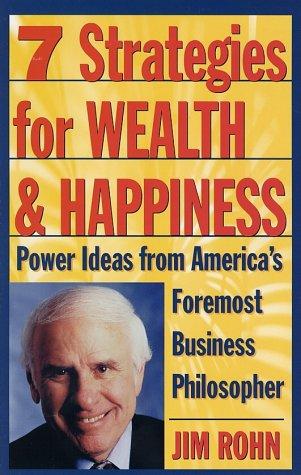
 | Rohn treats wealth and happiness as learnable disciplines, not luck — seven strategies span philosophy, goals, time use, association, and consistent self-education. Volume anchor behind Jim Rohn seminar rhetoric on resolve, game plans, and the law of use. Jim Rohn (1996) · Prima Publishing · ISBN 9780761506164 |
|---|
Key principles
- Disciplines, not luck — Wealth and happiness are built through repeatable strategies — philosophy, goals, time, association, and education — not lottery outcomes.
- Personal philosophy — Income follows refined belief about what is possible — clarify philosophy before tactics.
- Goals on paper — Vague wishes dissipate; written targets with deadlines create accountability architecture.
- Time stewardship — Days are the currency — guard mornings and calendars against drift and low-leverage busyness.
- Association law — You absorb the standards of your circle — upgrade proximity before upgrading affirmations.
- Law of use — Skills and assets compound when exercised — neglect erodes capacity in every domain, including character.
Core science
Not a laboratory volume — a structured personal-development curriculum from Rohn’s direct-sales and mentorship lineage (Earl Shoaff). The “science” is behavioural: repeatable strategies, measured reps, and association effects on identity — pair with Behavioral change canon pillar 3 when you want neurochemical grounding.
Application
Use as the long-form container for Rohn’s seven strategies — philosophy, written goals, time stewardship, association, and daily self-education reps. Reach for it when seminar clips need a shelf spine, not when you only need one tactical move from doctrine.